In 2025, I picked up the Northern Sámi language, and cited an application called IndyLan as one of my main methods I incorporated during my experience. Several months later, I thought it would be good to contribute my thoughts about the application. and give it a proper and honest review. It is a fairly obscure application, and we will discuss a couple of explanations for its obscurity. In fact, I was introduced to this application through Reddit when I was doing a search for language learning resources.
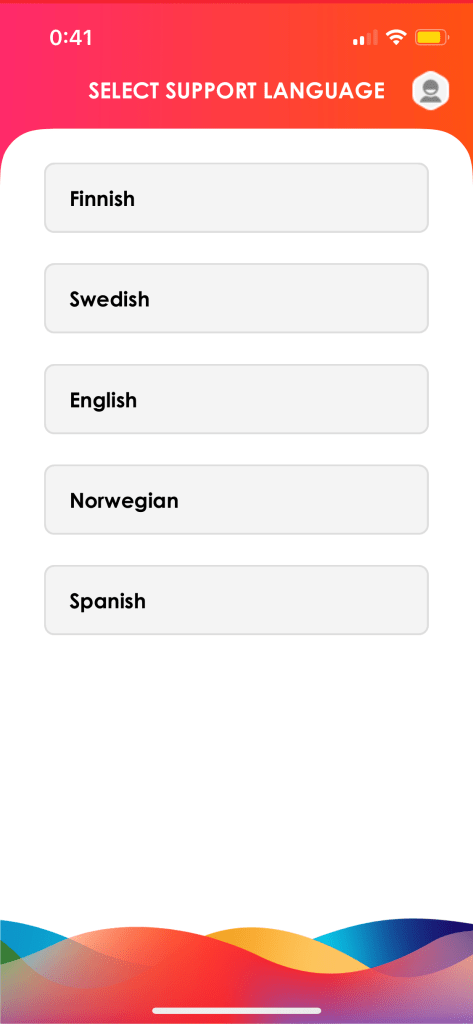
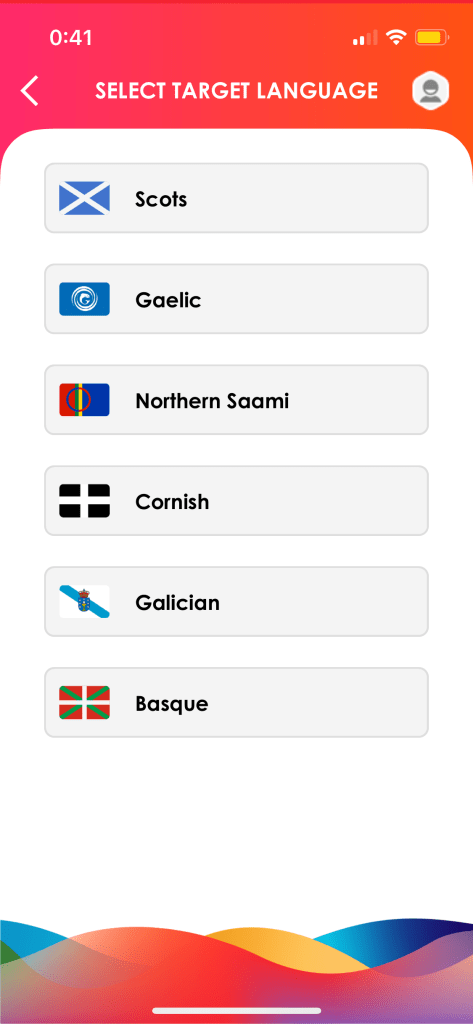
IndyLan is a project funded by the European Union which aims to teach users some of Europe’s endangered languages. Developed in coordination with Heriot-Watt University in Edinburgh since 2019, and released in 2021, IndyLan is a completely free-to-use smartphone application available on the App Store, though its status on the Google Play Store is currently uncertain. It is available in English, Spanish, Finnish, Norwegian, and Swedish, with courses for 6 endangered European languages. These are, in no order of endangerment, Scots, Gaelic, Cornish, Basque, Galician, and Northern Sámi. IndyLan takes a two-pronged approach here, introducing the user to the language, its words and grammar, as well as introducing the user to the culture and history behind the people group who use the language. There is also an option for users to create an account, but all features are accessible to guest users anyway. As such, this review will mainly be from the perspective of a guest user without an account.
I am unsure when IndyLan was removed from the Google Play Store, but the project still has the application files for Android systems. While IndyLan does have a social media presence, perhaps what contributed to its obscurity is its fairly limited reach, being only readily accessible to iOS users, with Android users having to go through more steps to install IndyLan. Additionally, IndyLan covers a fairly limited selection of endangered European languages, which almost certainly are not the most widely learned languages in the continent. Covering more European languages that align with IndyLan’s interests, such as Occitan, Bavarian, and Wymysorys could potentially help garner more interest in this application. Nevertheless, I hope that IndyLan has garnered and continues to garner a dedicated community amongst language learners and speakers who desire to keep their languages alive.
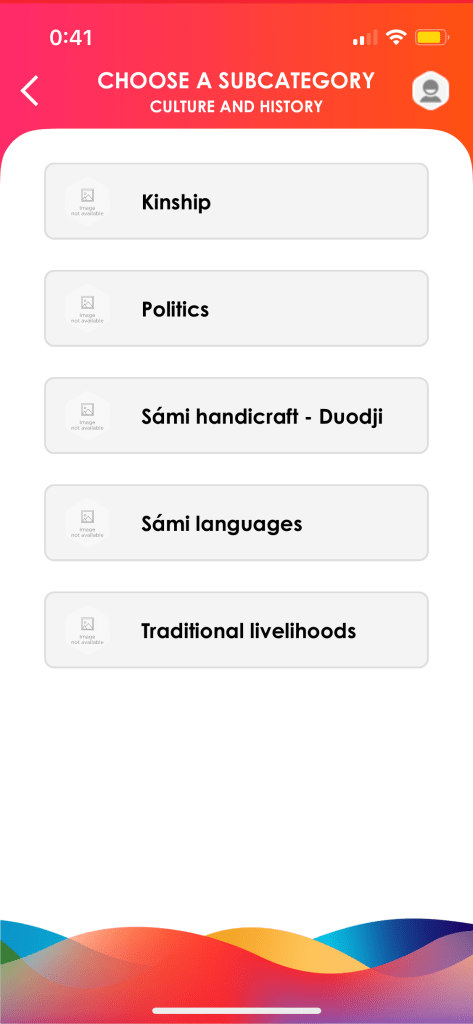
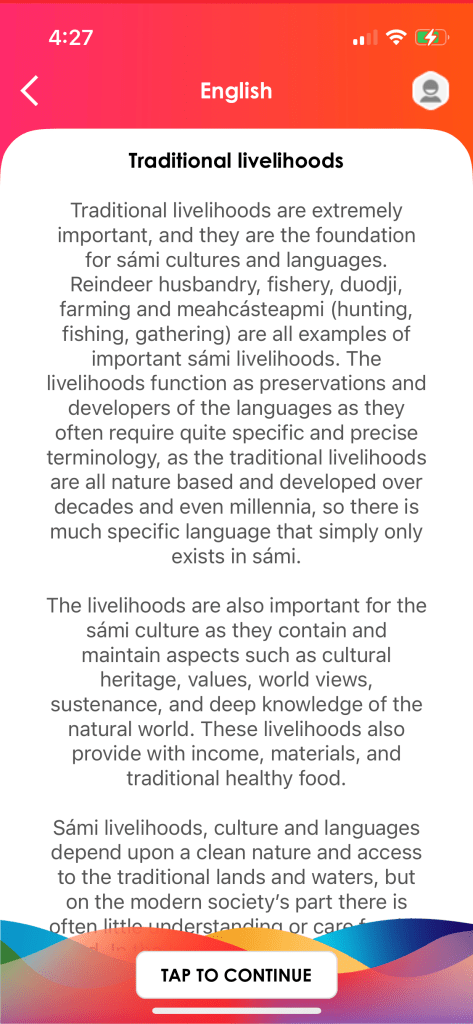
There are lessons on culture and history, which primarily take place through text comprehensions in English and the target language. In each section, users are presented with a text passage about a certain aspect of say, Basque culture, and in the following screens, users are then asked several multiple choice questions about what they have read. The number of sections vary from language to language, with some focusing mainly on family traditions, political structures, and more about the language, while others might elaborate more about the ways of life and even crafted goods. The text passages only feature a wall of text though, so for sections covering the art, music, and cultural side of things, these sections could definitely benefit from having images that showcase examples such as crafts and instruments. Another potential improvement would be audio integration, such as a listening comprehension format, to give a bit more diversity in these lessons. Nevertheless, it is definitely good to not detach the people from the language, and giving users a better insight on the people and cultures behind the languages.
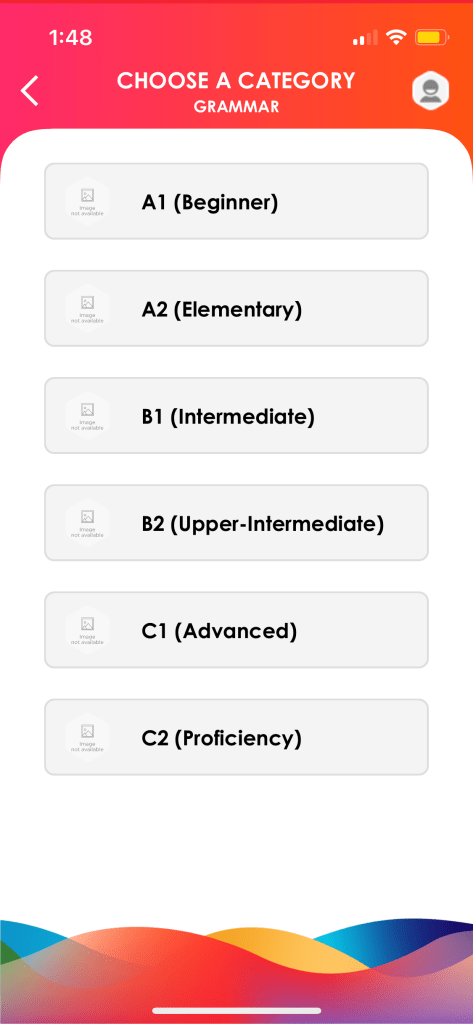
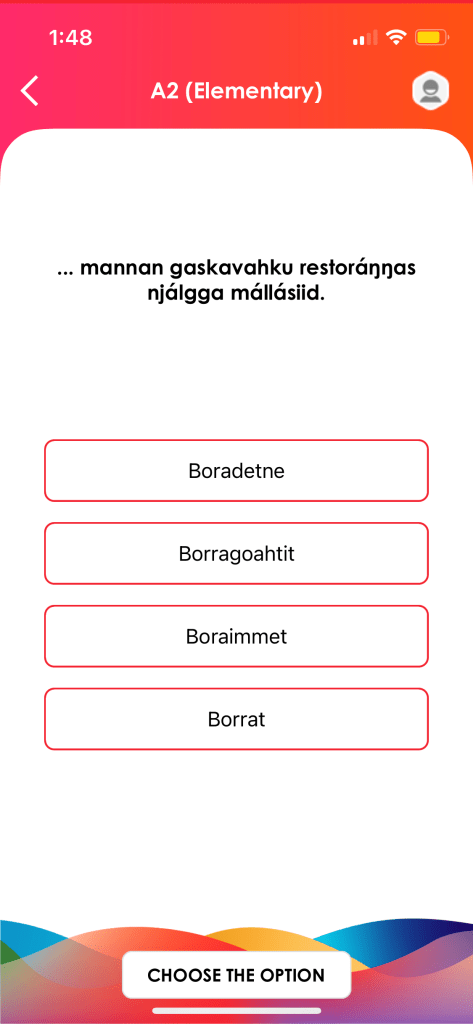
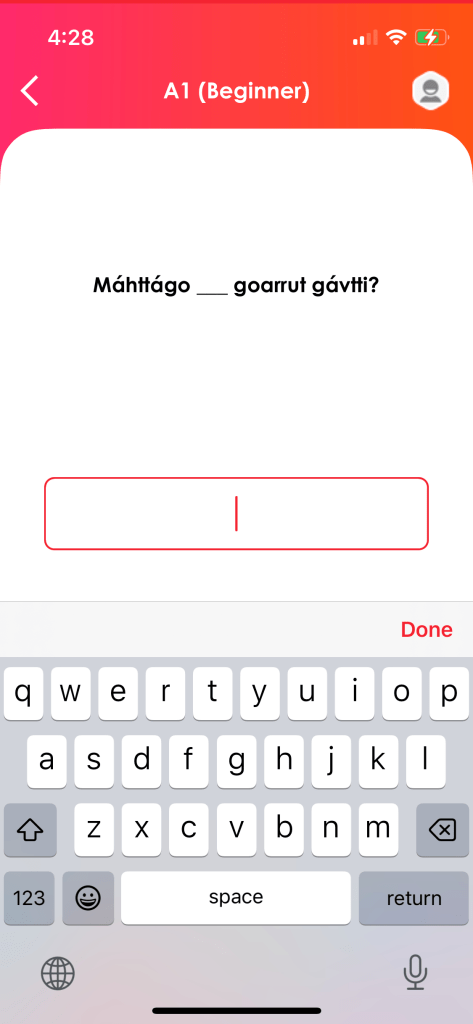
The grammar sections on IndyLan seem to be intended for practice and review, complementing external language lessons or course material. There is no introduction to the grammatical concepts covering in each subsection, and so users would need to have been introduced to certain grammar rules and themes before attempting these sections. Exercises may include typing or filling the gaps, and multiple choice questions, and after a number of wrong responses on the typing exercises, users may opt to display the correct answer. The grammar sections are organised by different levels of proficiency following the Common European Framework of Reference (CEFR) for languages, with more complex grammatical features generally covered in levels like B2 and C1. Not all the grammar points are covered in each level though, so some grammar points covered in coursebooks and classes may go underutilised here. During my learning experience, I did not really touch on the grammar sections all that much for these reasons.
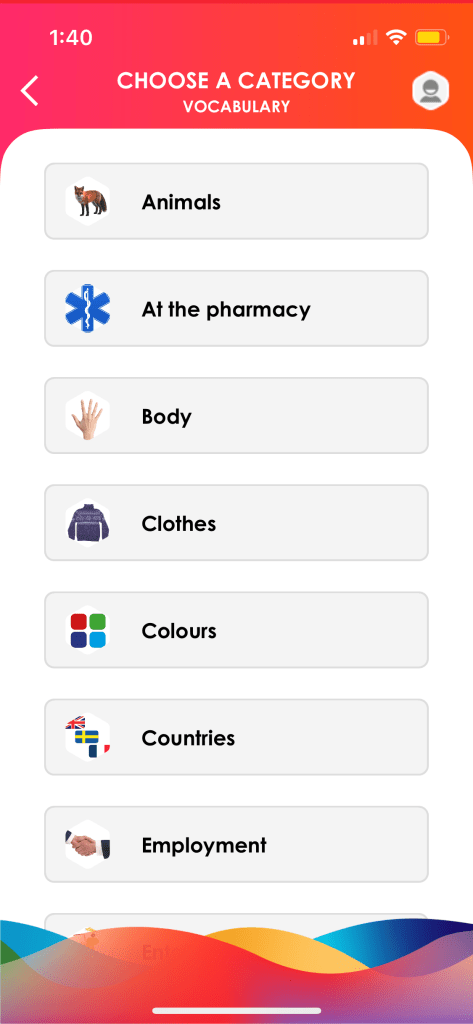
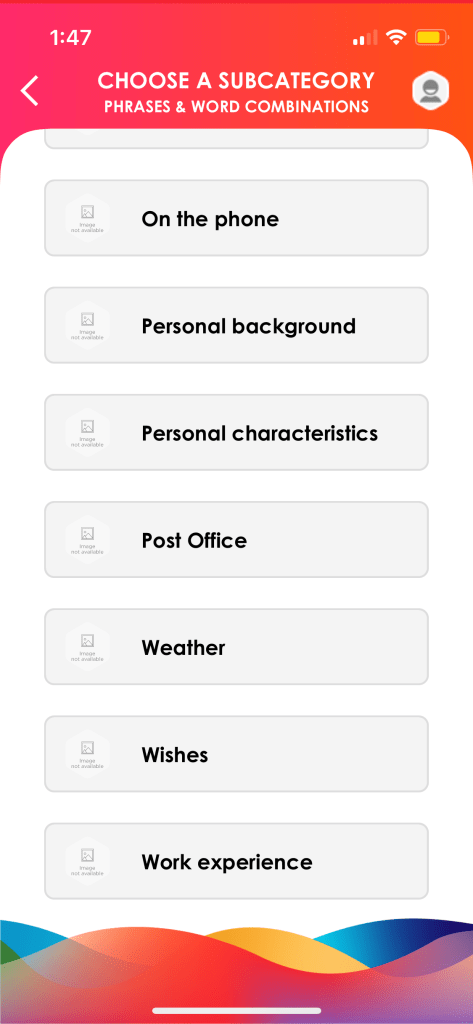
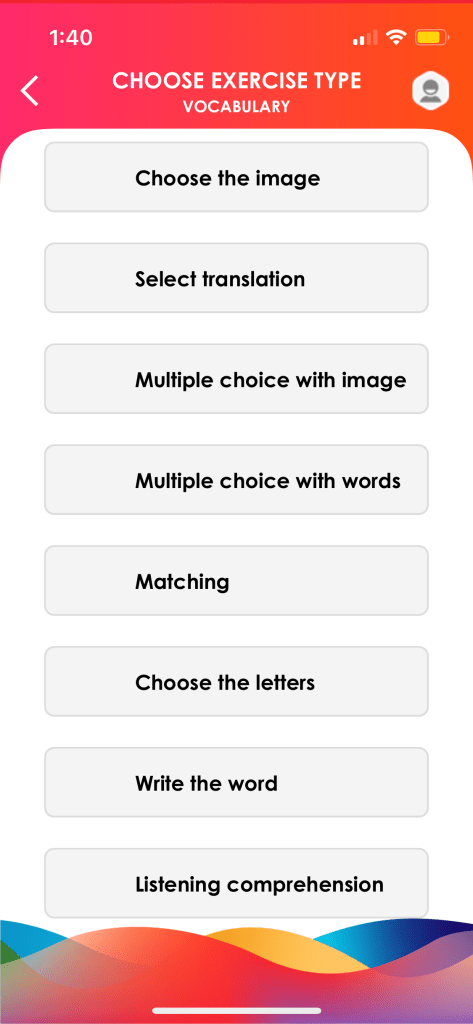
In my opinion, one of the most well-designed features of IndyLan was the vocabulary section. In this review, I decided to group together phrases and word combinations together with vocabulary as they largely pertain to introducing the user to various vocabulary and expressions they can use to express themselves. Words are introduced using flashcards, and are classified into vocabulary categories, and even further into subcategories, giving a rather organised impression. Furthermore, there is a diversity of vocabulary exercises the user can do to practice their newly acquired words. For some subcategories, flashcards are lacking, so I am unsure if this was an unintentional oversight. Perhaps my largest issue with the presentation of this section is the lack of a preview in the words that are covered in a certain subcategory. As such, the user would have to go through the flashcards multiple times in order to pick up new words, except that the user does not know if they have seen all the words for that particular subcategory. A checklist or preview of words covered in the subcategories would be a great improvement to the vocabulary section in IndyLan.
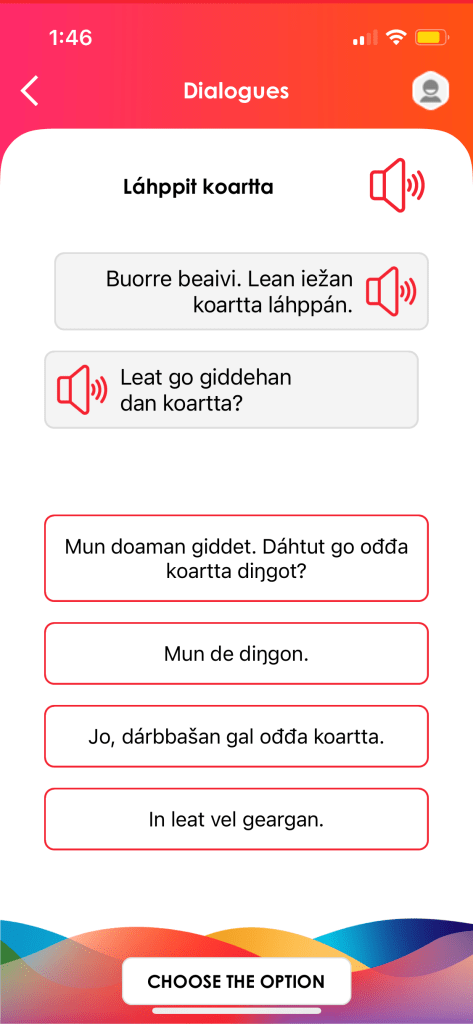
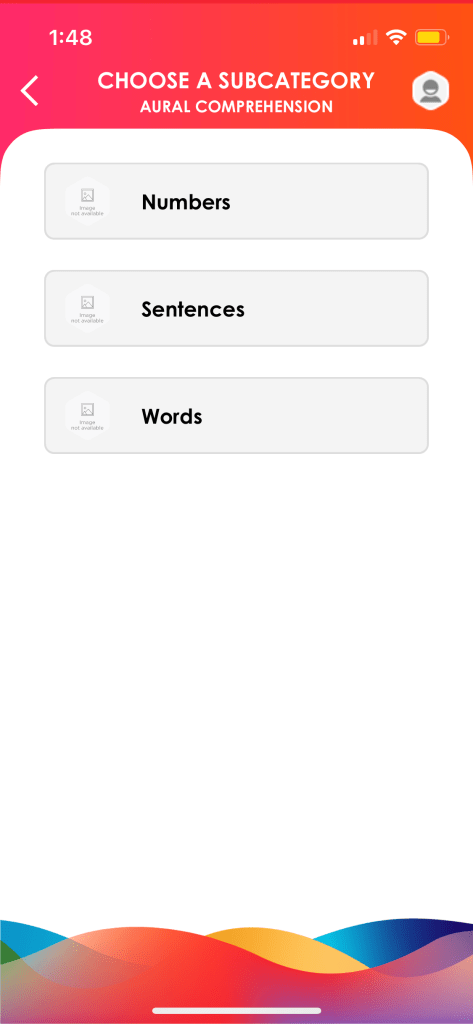
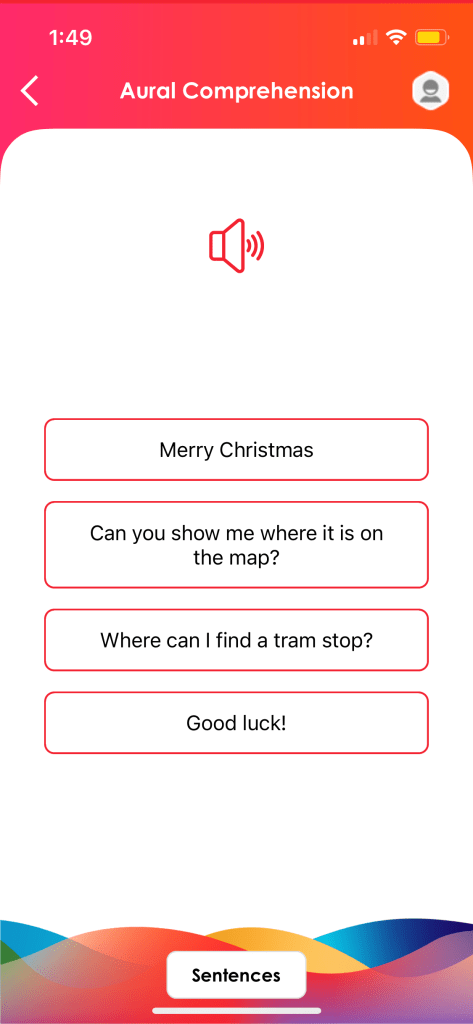
While flashcards do feature their own audio voiceover, if one desires to practice their listening comprehension, there are two possible sections to facilitate that. The dialogues section features audio conversations in various everyday contexts, with an example conversation, and a multiple choice practice where the user is prompted to continue the conversation with the most appropriate response. Themes such as doctor visits and renting flats are covered, which should encompass situations in which a learner might most likely find themselves. The other section called aural comprehension focuses less so on conversations and cohesion thereof, but more rather, linking a word sounded in the target language with the user’s localised language. It is more of a matching exercise between sound and word, while for numbers, it seems to be a spelling exercise like the listening comprehension practice in the vocabulary section. In my opinion, it could be a mislabeling of the type of exercises, since listening comprehension exercises would feature a conversation playing, with the user responding to questions related to the conversation. These audio-based exercises (except dialogues, which I particularly enjoyed here) came of as more of spelling exercises or exercises one would encounter in the vocabulary sections, but in audio form.
I must note that in these exercises, there does not seem to be an algorithm which sorts words, phrases, flashcards, and grammar bits by familiarity, nor user’s perceived difficulty. As such, there is no spaced repetition nor other algorithms that dictate which questions are shown more frequently than others.
So, what is my verdict? Personally, I have derived the most value out of acquiring new words in Northern Sámi through the vocabulary section and its flashcards, and found it helpful in learning and building my vocabulary. The cultural sections also add a nice touch to the courses overall, as it shines some light on the cultures of the people groups who use the respective languages. I have also come to appreciate Sámi handicrafts called duodji, though I would have also appreciated some images to showcase the types of handicrafts that the Sámi are known for. Food would also be a nice way of acquainting with a people group’s culture, which could form another category under the ‘Culture and History’ section of each language. The grammar sections do serve as some complementary practice material to go with other course material which covers grammatical rules, and as such, I do not see IndyLan as the sole resource to go to if one wants to learn the languages covered by IndyLan.
If you are looking for a resource to learn and practice languages like Scots, Gaelic, Cornish, Basque, Galician, and Northern Sámi, I would definitely recommend incorporating IndyLan into your language learning routine, and use it alongside other methods such as language courses, or self-study materials.
| The good | The not-as-good |
| Feature of a distinct culture and history section to introduce the user to the culture, people, and history behind the target language | Lack of vocabulary previews or checklists to let the user know what to expect in a certain vocabulary subcategory |
| Neatly organised vocabulary sections | Visually lacking culture and history sections |
| Diversity of exercises the practice grammar and newly-acquired vocabulary | Practice is not available for all the grammatical features in a certain category, such as grammatical case |
N.B.: There is a lack of a sorting algorithm to sort vocabulary by familiarity to curate subsequent practice sessions. Many applications employ spaced repetition, but seemingly not IndyLan.

