Disclaimer: The language-learning application covered in this review features AI-generated assets and outputs pretty heavily.
If you have watched sponsored segments on videos, you might have come across language learning applications like Babbel and LingoPie (which I have reviewed before) pop up. There are some more minor examples, though these applications tend to vary in quality and in marketing. Today, I want to talk about a language learning application that I picked up from this social media outreach, just to give it a go to see if it is indeed really worth the hype. Today’s topic is Airlearn. But why am I releasing this review in the middle of this post series? Well, you would have to read on to find out.
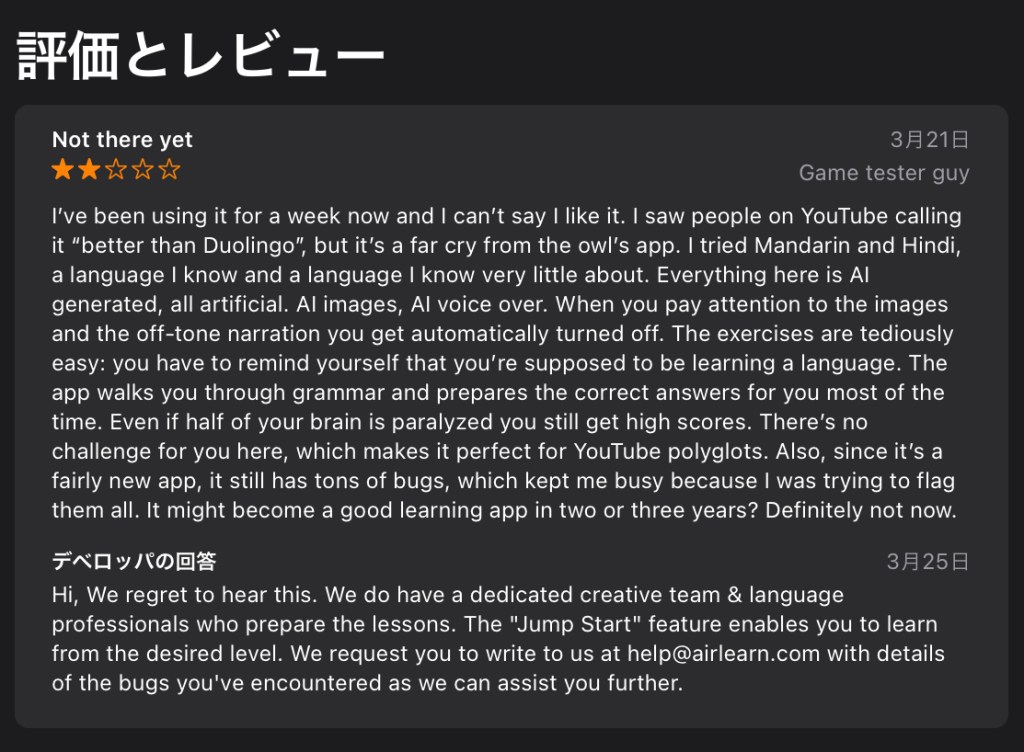
On Airlearn’s description in the App Store, it does not really make much bold marketing claims, just the cookie cutter claim of ‘learn [language] fast’, with no suspicious claims of becoming fluent quickly. Yet, in its marketing in sponsored segments, it has claimed to be ‘better than Duolingo’, which, frankly speaking, as bold as it sounds, it is a pretty low bar to clear given how far Duolingo has descended in its quality. In case you have not heard, Duolingo has pivoted to favouring generative AI in its various courses, leading to a growing disdain towards the green owl over concerns with quality, and the general feeling that Duolingo does not actually help in language learning. And so, for an application to claim to be better than Duolingo, one would expect an application that does not involve the use of generative AI in application and course development, or an application that somehow presents a convincing case for the integration of generative AI into language learning.
Nevertheless, my first impressions when first encountering Airlearn were just plain scepticism. Granted, the first reviews I combed through have criticised the application for its reliance on artificial intelligence to generate image or visual assets and voiceovers, though Airlearn rebutted by claiming they did in fact have a team to design these assets, and language experts to develop the courses. And so, I thought, maybe the truth is somewhere in between, and not wanting to be biased when starting off the review process, I took these claims with a grain of salt, and bit the bullet by downloading and launching Airlearn, doing their 5 free lessons offered per day to see how things went.
When I first started my review process on Airlearn back in November 2025, Swedish and Marathi were Airlearn’s newest additions, over time, Airlearn would add more languages to the list, with Telugu and Tamil added to the list in December 2025. Further recent additions also included Thai and Kannada, bringing the original 12 languages offered on Airlearn (Spanish, German, French, Italian, Dutch, Portuguese, Japanese, Korean, Chinese, Hindi, English, Russian) to a respectable 18. As such, the representation of some languages of India in this application might pose as an advantage over several others, which might only focus on Hindi at most.
And now, to mention the elephant in the room.
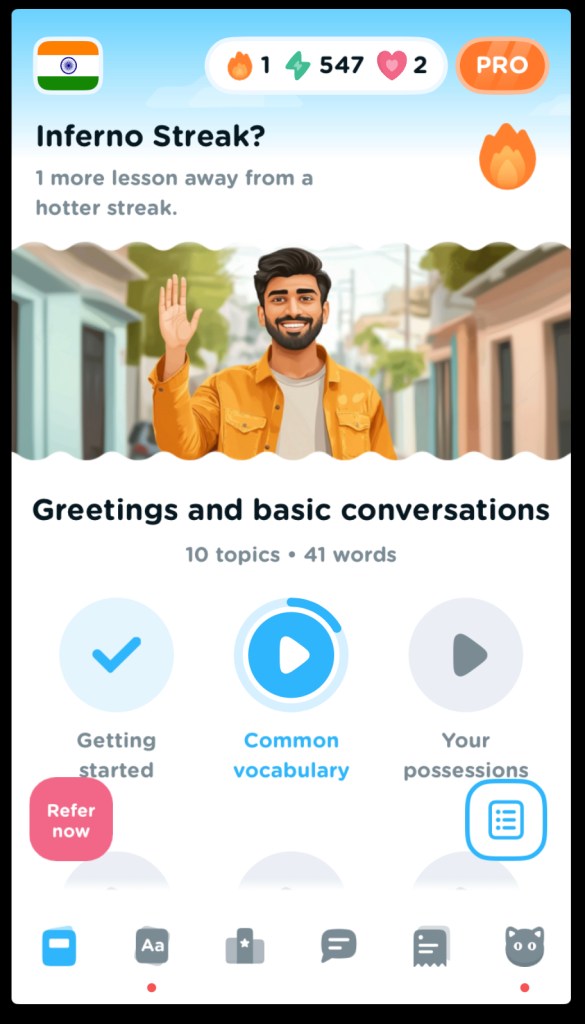
Generative artificial intelligence was indisputably used in the making of this application. The visual assets, perhaps with the exception the mascot and lesson icons, bear the hallmarks of generative AI. While the development team have claimed that they have a design or creative team, I could give the benefit of the doubt that they have worked on the mascot design and lesson icons, which appear less likely to be generated by AI. However, the other images featured in the lessons were almost certainly AI-generated. See if you can spot the hallmarks.
Next, is the AI-generated voiceover. The voiceovers generally come across as robotic, or does not really reflect the stress patterns very well. Nevertheless, these voiceovers play over the entire lesson, including some cultural or historical segments which we will cover later. To test how accurate the voiceover is, I switched over to the Chinese course. And I must say that I am disappointed, as some tones sounded very unnatural and does not reflect how a native speaker would sound like. Instead, the tones sounded like how a beginner or intermediate speaker would pronounce them, giving a potentially misleading impression of how Chinese words and tones sound like.
Now, here comes perhaps my biggest gripe. The content is heavily diluted. Each lesson covers around a couple of words, and the exercises that center around these words, as simple as they are, feel very rote. Take this screenshot for example. This is the screen you will most likely see when you are introduced to a new word.
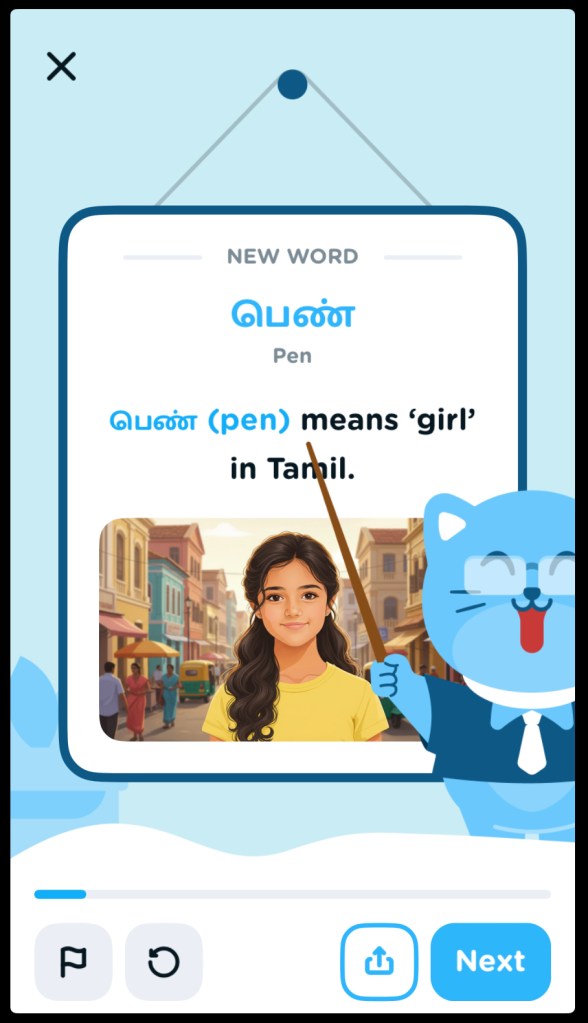
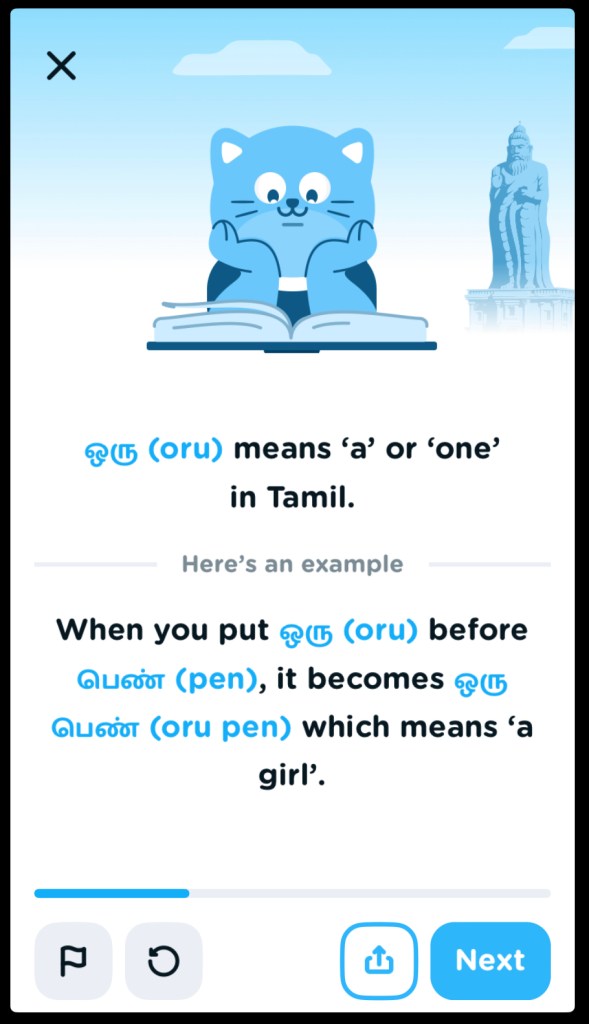
Notice the verbosity? It definitely sounds like something churned out by a large language model, with so much waffle around a miniscule bit of content. This screen could have been simplified so much, perhaps down to the new word as a language pair, with a toggleable pronunciation guide and voiceover, and a corresponding picture reflecting the word, such as the handwritten idea I have below, using ‘girl’ as an example.

In fact, when I was designing this mockup, another thought crossed my mind. Was generative AI even necessary for this part? A flashcard-like format gives more focus to the word-pair and corresponding image, and inherently filters unnecessary junk information like “means [word] in [language]”. We already know what language we are working with, so there is no need for this verbosity. Icon or image design would also be quite intuitive especially for more basic words, and generative AI is definitely not needed in this process as well. Additionally, rather than using synthesised voice lines from generative AI, why not have native speakers actually giving the voiceovers so users know what the stress or tones sound like in real life? If language experts and graphic designers were indeed involved in development, then these issues should have been worked on before release.
Because words are generally introduced one or a couple at a time, some types of grammatical words should have been introduced together, such as the demonstratives (this, that, and these, those). Instead, these words stretch over multiple lessons or themes, giving a very disjointed organisation. Sure, the words may be organised into themes such as family, but these grammatical words definitely deserved a better organisation here.
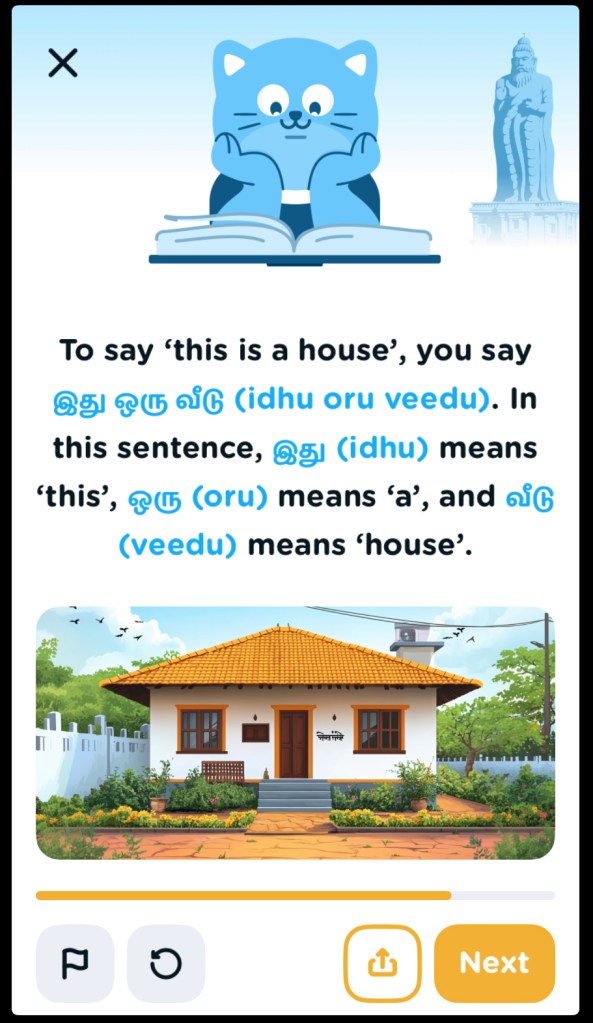
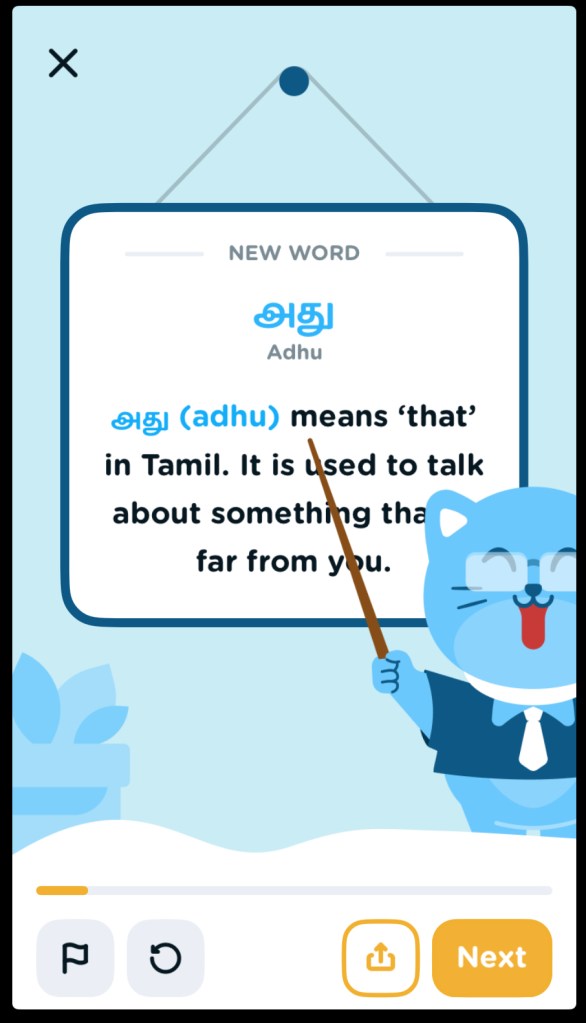
Around half of the languages featured on Airlearn use non-Latin characters in their writing systems, which might necessitate some introduction to the writing system to familiarise the user with the character-sound correspondences. However, while a pronunciation guide is shown, or toggleable, alongside the characters, it would have been better to teach the basics of the writing system first, while weaning the user from the pronunciation guide. Perhaps an exception could be made for the Chinese course, since new characters would be introduced to the user, and require hanyu pinyin accompaniment.
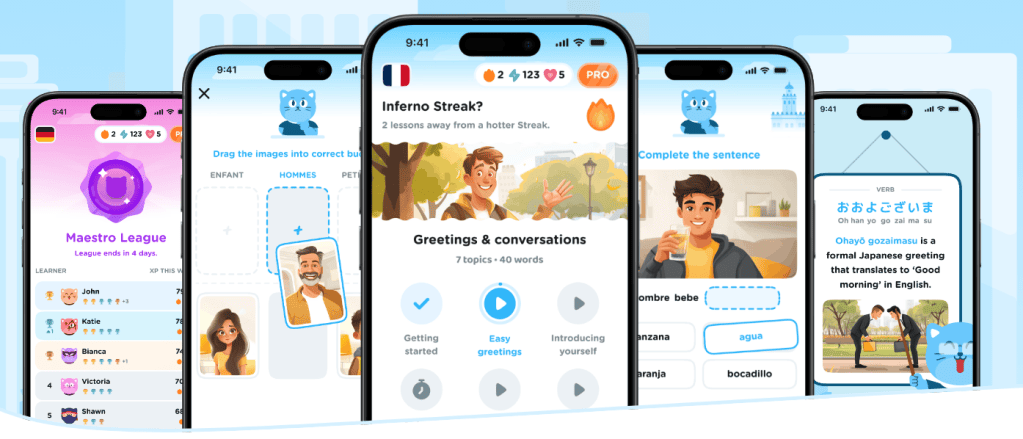
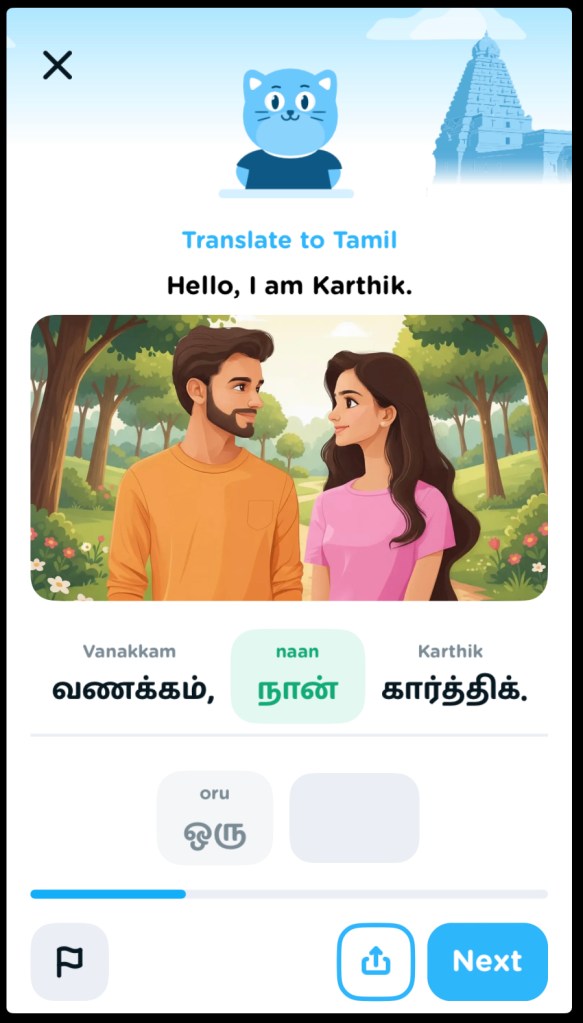
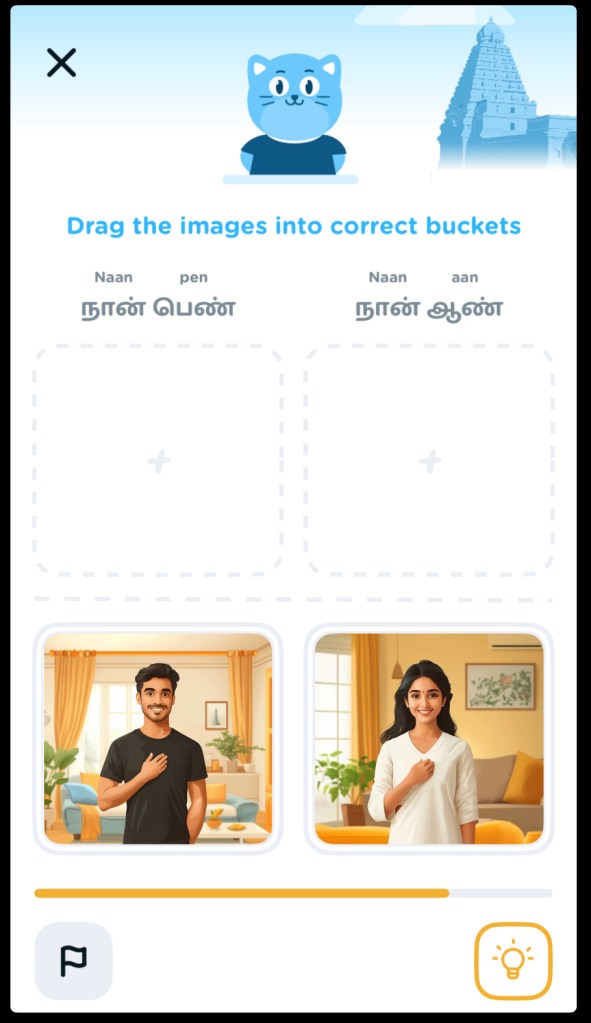
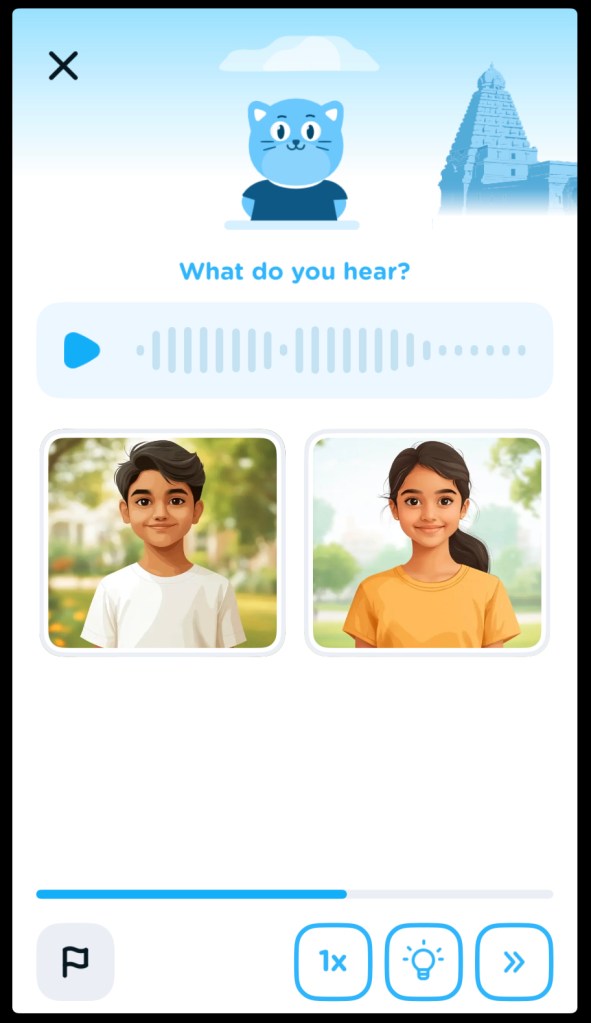
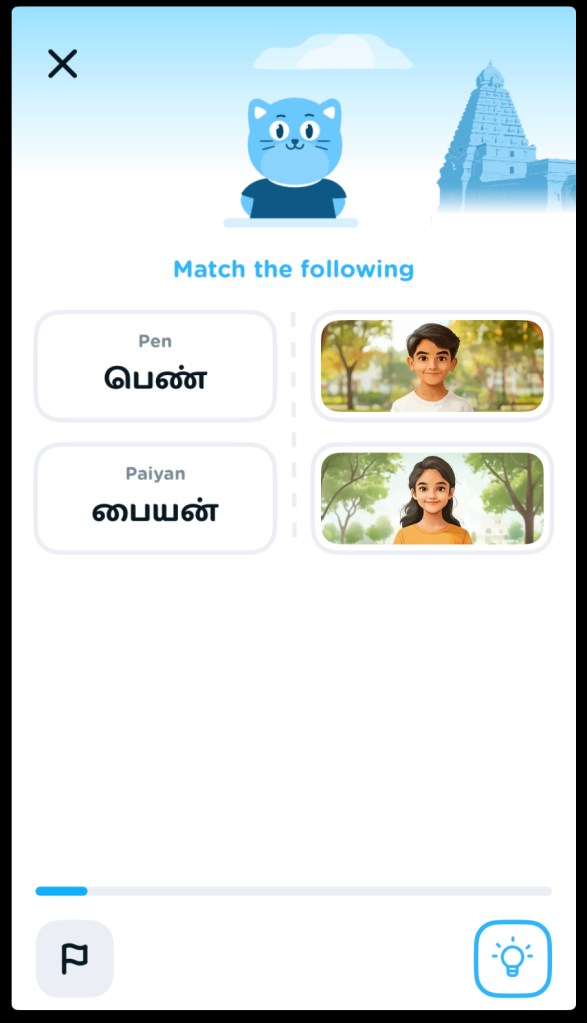
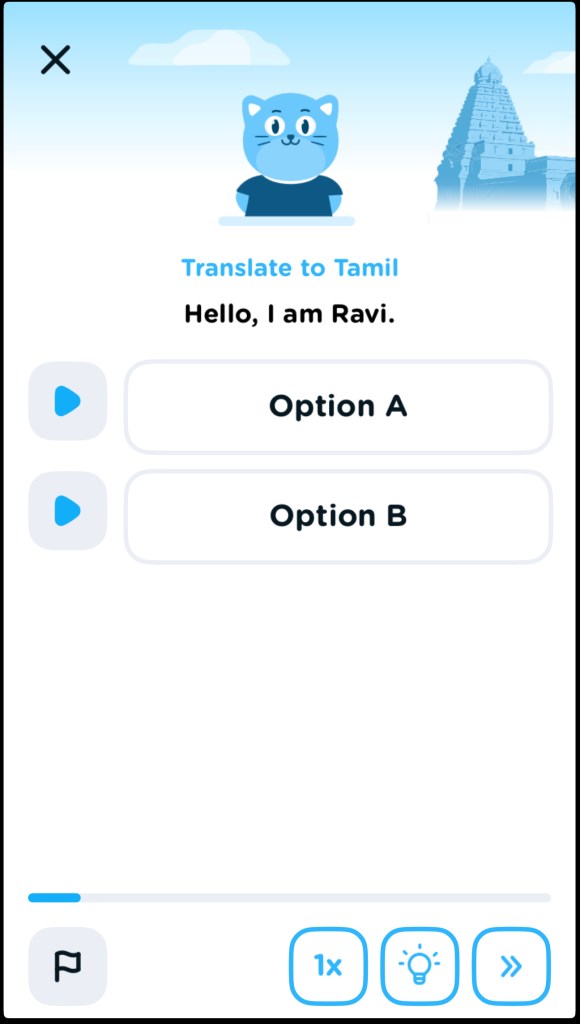
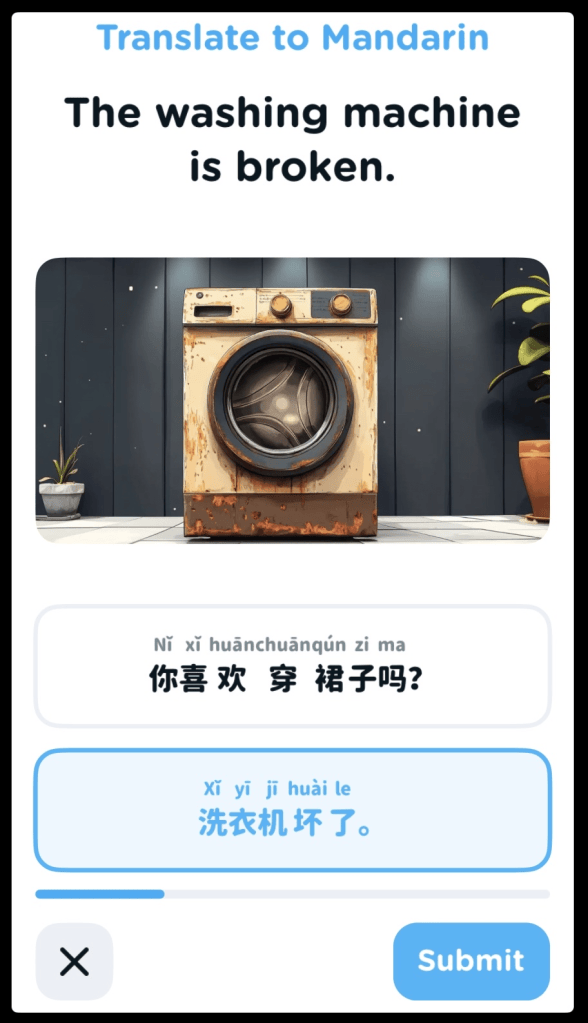
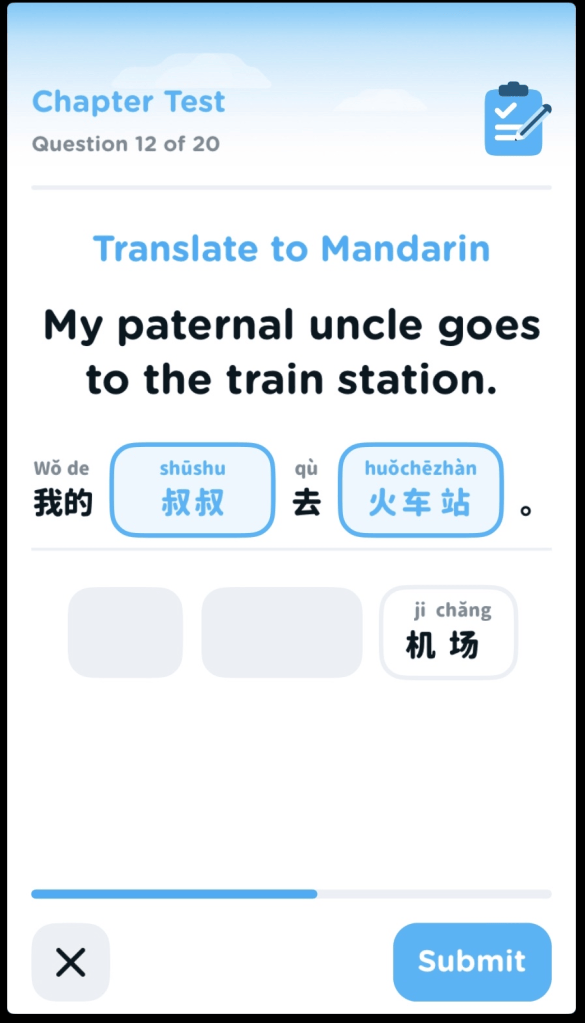
Lastly, the exercises offered on Airlearn are pretty simple, posing not much of a challenge to the user. This may come across as rather rote to the user, especially given that only one or two words are featured per lesson. There are various matching exercises, which is not really unique to Airlearn, as with matching an audio clip to a word or phrase in the target language or English. It is pretty much one would expect from a gamified language learning application. There are also some exercises where one would insert words into a sentence in a cloze-like fashion, but unlike a typical cloze exercise like on Clozemaster, the ones on Airlearn do not seem to pose a challenge at all. To me, these exercises come off as too simple, or lacking some challenge such as more misleading or synonymous options. This lack of difficulty even extends to the review sections, where one would expect questions to be at least a bit more difficult. Some sentences also sound rather unnatural. No one would say ‘paternal uncle’ in a sentence like in the following screenshot, even though the Chinese 叔叔 directly translates to that. A more natural sentence would have just said ‘uncle’.
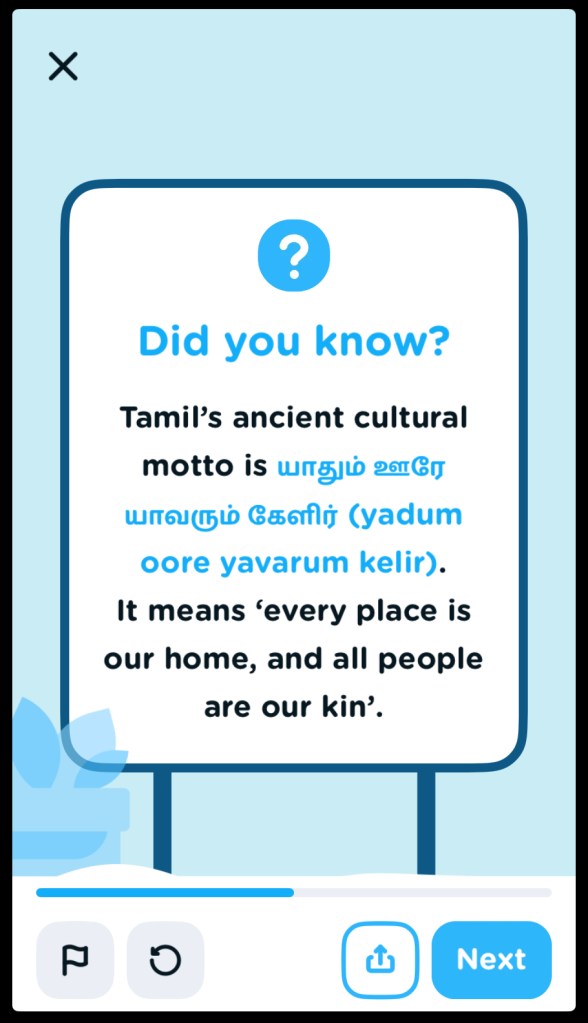
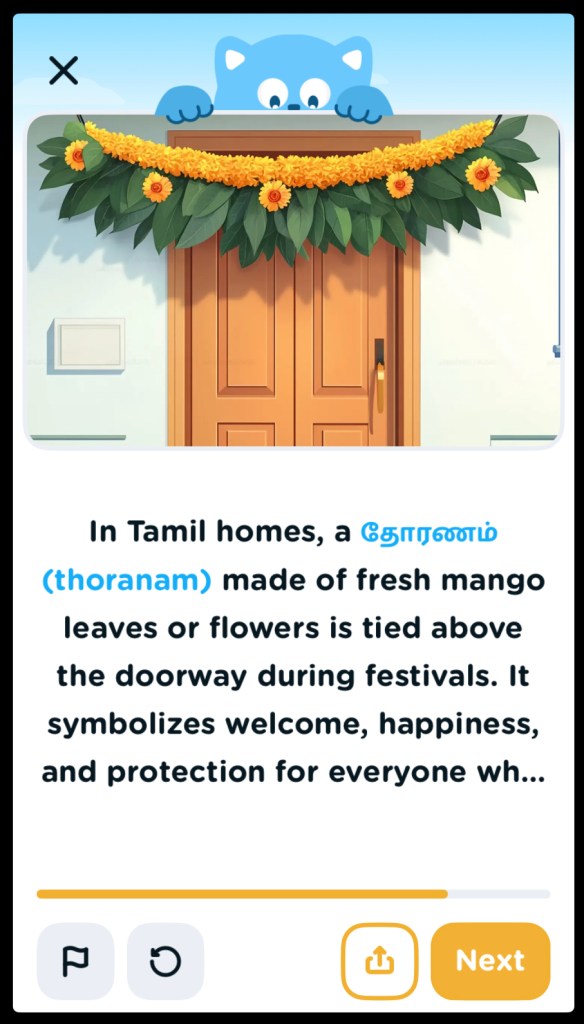
A silver lining is, intercalated between the exercises, are some titbits or fun facts relating to the target language. For the case of Tamil, it could be things related to Tamil Nadu, the Indian state where Tamil is spoken. Culture, industry, traditions, and history may be given a mention in these screens, giving a better cultural insight compared to many competitor applications, which tend to focus primarily on the language side of things. Thus, I thought this could be another advantage. However, it is likely that, as with the art and the lessons, these titbits are AI-generated, and without knowing how well things have been fact-checked in the development of this application, they should be taken with a healthy dose of scepticism. It is also likely that the output had been pasted directly from the AI-generated output, resulting in some parts being truncated in order to fit into the screen or text box.
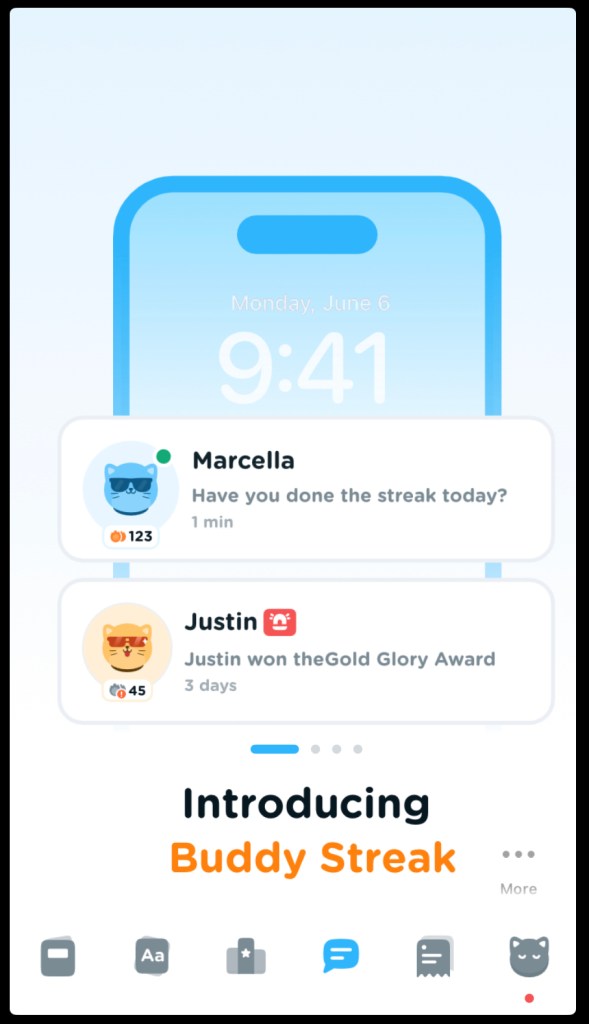
Other features to encourage user retention is the implementation of a streak system, and in Duolingo fashion, an experience league system, where users who accumulated the most experience points from lessons and practice in a certain pooled group would advance to the next league, while users with the lowest number of experience points gained would be relegated. There is also a buddy system to remind friends to come onto Airlearn and practice or learn new lessons. To me, these two features seem very convergent with how Duolingo does it, and so my opinion on these does not really differ much from what I had about Duolingo’s league system, for instance.

To conclude, what is my verdict? For an application that markets itself to be ‘better than Duolingo’, and taking potshots at the green owl on Twitter / X, in my opinion, Airlearn manages to fail at this claim. Not only does it fail this claim, Airlearn perhaps better functions as a warning to Duolingo against using generative AI to such an extent, such that content is heavily diluted, and I conclude my daily lessons without the impression that I had learned a substantial lot. There is some credit where it is due, since there is slightly more representation of some major languages spoken in India, such as the newly added Tamil (which I have focused on here) and Marathi language courses, something you do not really find all that easily.
Nevertheless, I do not recommend Airlearn at all, as I am not convinced that the integration of generative AI into asset creation, lesson planning, and voiceovers have resulted in a product that fits their image of an application that is ‘better than Duolingo’, as low of a bar as it is now. Maybe you could try it if you are an absolute beginner, but it would be well worth the time and money to find alternative language learning methods and wean off this Airlearn phase should you choose to use it. Well, I guess it is back to community-created flashcards on Memrise and Anki for my Tamil language learning journey, and wipe this application from my devices. And to go back to the titular question, no, save your money and time on this slop application.
| The good | The not-so-good |
| Better representation of languages spoken in India. | Content is extremely diluted, it is possible to not feel like much has been learned in a lesson or two. |
| Inclusion of cultural and historical titbits about the target language within lessons. | Activity diversity is generally limited, and much simpler in comparison to competitors, even for review sections. |
| 5 free lessons at a go, which when combined with the diluted content, generally means the user is not going to learn much. | |
| Lack of introduction to writing systems, especially for non-Latin writing systems like Russian, Korean, Chinese, Japanese, Hindi, Tamil, and Telugu. | |
| Additional controversies related to the involvement of generative AI in course design. |
tl;dr: No, don’t use Airlearn; if you want to actually learn a language, give this a miss.

