When we discuss linguistic diversity, we almost always gravitate to the number of languages spoken or used in a particular region or country. Sometimes, we would also see the Gini index, which estimates the probability of two randomly selected individuals from a region or country who speak different languages. In these cases, talks of the most linguistically diverse country in the world would always point to this particular country, Papua New Guinea. After all, with 839 different languages spoken in the country of 11 million people, this diversity is nearly unparalleled by any country.
However, today, I want to answer the following question: What is the most linguistically dense country in the world? That is, which country has the most speakers per unit area or per capita?
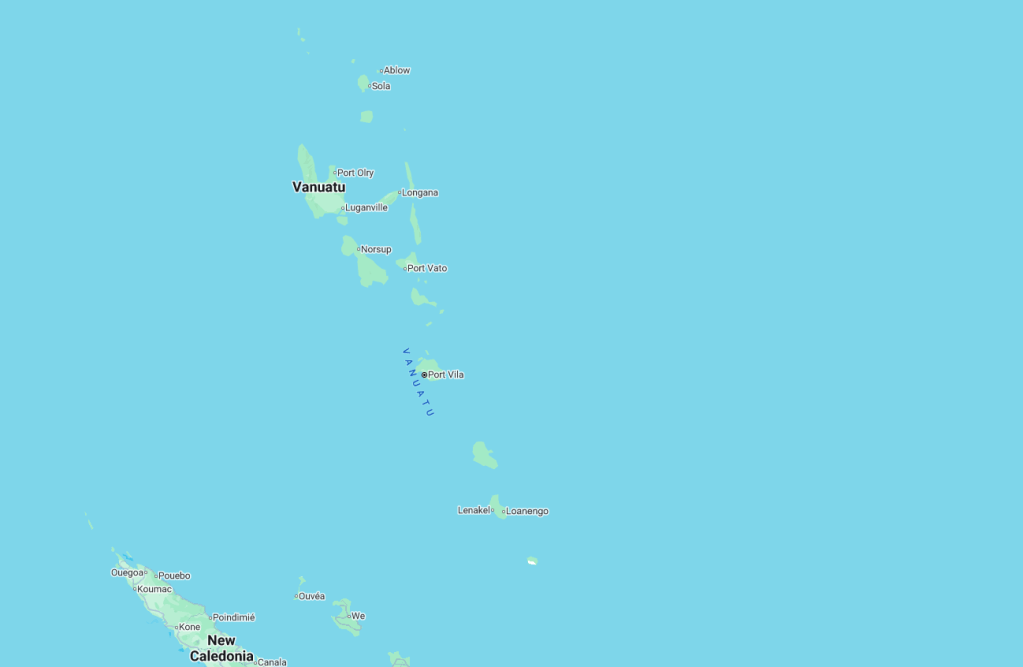
This is where the archipelago nation of Vanuatu stands out. Located in the region of Melanesia, Vanuatu has around 330 000 people spread over a Y-shaped archipelago of around 83 islands. Despite this small population however, this country is incredibly linguistically diverse, something that is actually quite little known beneath the Bislama, English, and French languages which are most commonly used today.
Per capita, this is where this country shines the most. As mentioned, Vanuatu is home to around 330 000 people, comparable to that of Iceland. With 138 indigenous languages spoken on its islands, this means that there is a mean of around 2500 speakers per language. This is extremely dense per capita, especially considering how Papua New Guinea, the most linguistically diverse country in the world in terms of number of languages spoken in its borders, has around 839 languages spoken amongst its population of 11 million. This makes Papua New Guinea’s linguistic density per capita to be around 13 000 speakers per language. This is not all though, as studies done decades prior suggested that the linguistic diversity of Vanuatu may have been as low as 565 speakers per language.
This 2500 speakers per language only represents a mean, and of course, in reality, some languages can have far fewer than 2500 speakers, while others can have far more than that. However, it is true that nearly every single indigenous language in Vanuatu is spoken by fewer than 10 000 speakers, with one exception, Lenakel or Netvaar, with around 12 000 native speakers. Perhaps a more concerning statistic is the number of languages with fewer than 15 native speakers, and are designated as ‘moribund’ in publications such as The Languages of Vanuatu – Unity and Diversity. Here, Alexandre François et al. found 18 indigenous languages of Vanuatu with fewer than 15 speakers, highlighting concerns on these languages eventually dying out in the near future.
Then again, absolute speaker numbers do not really translate well to likelihood of a language dying out all that well here. There is no doubt that languages with a few hundred to a few thousand native speakers are tiny compared to many languages around the world, but the key difference is, in Vanuatu, language fragility is not the same here. François et al. mentioned that traditional Vanuatu society is built around a few villages totaling a small population, usually a few hundred people. Yet, language transmission is strong, with younger generations readily learning their respective indigenous languages and attaining proficiency. That is the case except in moribund languages, wherein this transmission is under severe jeopardy. As such, with the exception of the moribund languages, the linguistic situation in the archipelago nation is actually somewhat healthy for the most part for now.
As an island archipelago nation, Vanuatu’s land area is around 12 000 square kilometers, spread amongst 83 islands. This makes its linguistic density by area amongst the highest in the world as well, with a mean of one language spoken per 88 square kilometers in Vanuatu. Using Papua New Guinea as a country of comparison again, Papua New Guinea has around one language spoken per 900 square kilometers, around 10 times more than that of Vanuatu. But even this geographic density is not evenly spread out in Vanuatu. For instance, Malekula and Santo islands have been recorded to have over 20 languages spoken on each of them, while the Torres Islands and Aneityum having only one language spoken each.
Unlike Papua New Guinea, where its spoken languages may be classified in many language families, pretty much every single language in Vanuatu belongs to the Austronesian language family, under the Oceanic branch. The only exceptions to these are the English and French languages introduced during colonial times, and the English-based creole, Bislama. Amongst the Oceanic languages of Vanuatu, only three of them are classified as Polynesian, namely, Emae, Mele-Fila, and Futuna-Aniwa. These Polynesian languages could trace their histories back to a millennium ago, a fairly recent divergence. This contrasts with the Oceanic languages of Vanuatu, which have been proposed to have developed in situ when Vanuatu was first settled, such as the Lapita culture. Over time, a dialect continuum would have developed in Vanuatu, where communities were interconnected by trade, marriages, and alliances. This ensured constant linguistic contact in the languages of Vanuatu. Thinking of the languages of Vanuatu as a web instead of a tree, when one innovation occurred in the web, this would spread to differing extents of the network. This resulted in a challenge to classify these Oceanic languages into proper subgroups, since this linguistic history would have yielded languages with intersecting similarities with one another.
And so, this has been a short introduction to not just a language or language family, but more rather, an entire country in which the most languages per capita and per square kilometer are spoken. While Vanuatu boasts these accolades, the linguistic situation may be subject to change. While the linguistic situation in Vanuatu has been quite stable in the 20th century, like many countries in the world, Vanuatu has been undergoing urbanisation, with more people moving to cities like Port Vila (the capital). This move would have pressured people to shift towards using Bislama for the most part, disfavouring the use of their own languages for communication across different people from different prior linguistic backgrounds.
One statistic I have found is a decrease in the proportion of people reporting the use of a ‘heritage language’ at home compared to Bislama. François studied the national census in 1999 and 2009, and found a decrease in the population who reported using a heritage language at home, from 73.1% in 1999 to 63.2% in 2009, and an increase in Bislama usage from 23.3% in 1999 to 33.7% in 2009. As such, despite the relatively healthy linguistic situation in Vanuatu in the 21st century, the growing influence of Bislama could potentially pose a problem in the erosion of Vanuatu’s linguistic diversity.
Further reading
François, A. (2012) ‘The dynamics of linguistic diversity: Egalitarian multilingualism and power imbalance among northern Vanuatu languages, International Journal of the Sociology of Language, 214, pp. 85-110.
François, A., Franijeh, M., Lacrampe, S., Schnell, S. (2015) ‘The exceptional linguistic diversity of Vanuatu’, In: (ed. François, A., Lacrampe, S., Franijeh, M., Schnell, S.) The Languages of Vanuatu: Unity and Diversity, Studies in the Languages of Island Melanesia, Canberra, pp. 1-21.
 The Language Closet