Disclaimer — This essay might contain spoilers for a singleplayer language puzzle game.
The Rosetta Stone is without doubt, one of the most iconic historical artifacts, due to its role in aiding decipherment of the Ancient Egyptian hieroglyphs, as well as the Demotic script. This provided us great insight in how the Ancient Egyptian language might have worked when it was still spoken. Other examples of decipherment also include that of cuneiform, once used to write the Sumerian, Akkadian, and Hittite languages.
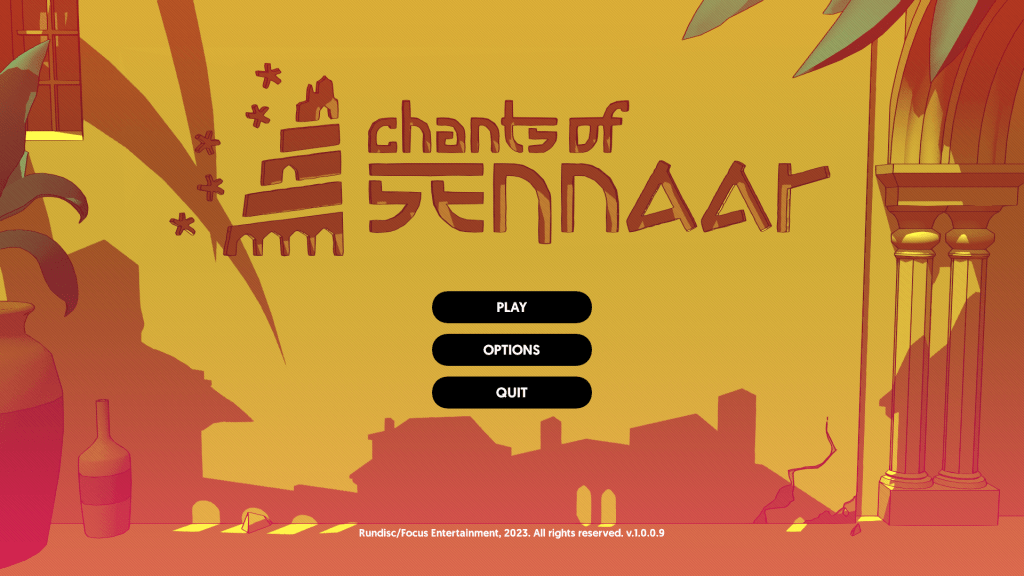
I have been enthralled by how deciphering such scripts occurred, and the various techniques applied to them, but I have found a game that scratches that tiny itch of curiosity. Staying true to the deciphering of writing systems theme today, I want to talk about something special, and something that I have never really done so on The Language Closet — I want to talk about a game that I have recently played, one that pertains to this very topic. This is Chants of Sennaar.
Released in September 2023 on the PC through Steam, and the major consoles PlayStation 4, Xbox One, and the Nintendo Switch, Chants of Sennaar is an indie game featuring puzzle mechanics, a large focus of which is on the languages spoken in the game. All of these languages are entirely fictional, and are represented using a logographic or ideographic script. There are certain stealth elements involved as well, but its core gameplay revolves around the decipherment of these writing systems.
Its theme centers around the myth of the Tower of Babel, and the tower the player navigates through is also inspired by that very tower. From murals depicting the origin story of some of its lore, to the visual design of some of its individual floors, Chants of Sennaar does indeed reflect the rather Mediterranean and Mesopotamian aesthetics, adding to the worldbuilding in the game. This is also complemented with a great sound design, adding atmosphere to the individual floors. In this review, to minimise spoilers, I will use only screenshots of the first floor, with one from the second floor.
Each floor in the tower speaks one distinct language. There is no indication of how related these languages are to each other, nor is there any indication of the phonologies of these languages. Instead, speech bubbles and signs feature text printed in the language used by that floor. As aforementioned, all languages are logographic or ideographic, meaning that in each character, there could be patterns from which we can draw that would reflect a certain function or meaning. These glyphs will be recorded in your journal, which you can access to enter your guess of what the glyph could possibly mean.

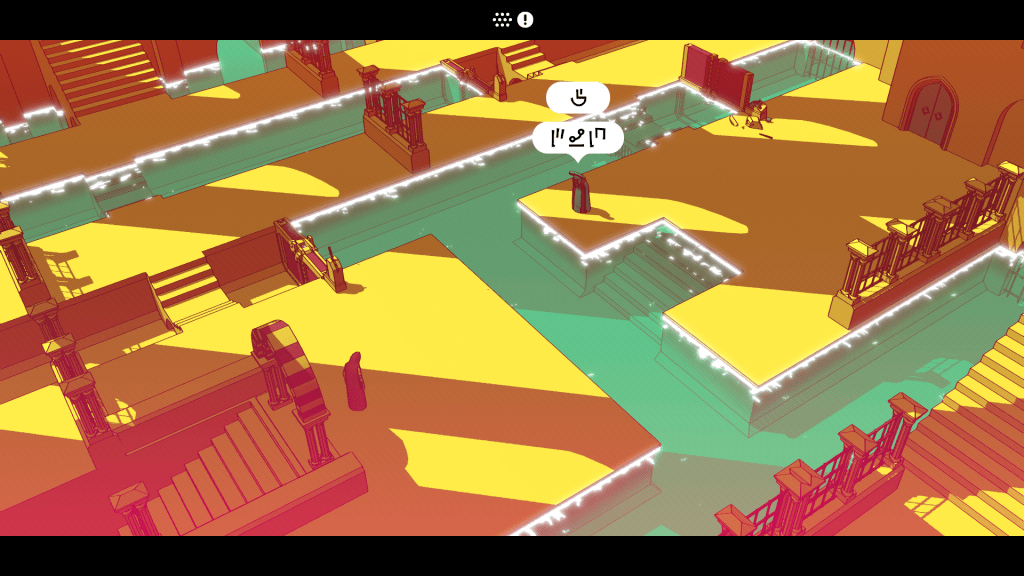
Deciphering these glyphs would largely involve examining the patterns and contexts in which these glyphs are used. If the player misses some bits of dialogue or scenes that they need to revisit, they can do so at the location where scene originally played. Some of these glyphs may use this thing called radicals, which can help inform parts of speech or other linguistic function in the floor’s language. This feature of radicals may be inspired from Chinese characters, as radicals can confer some semantic or structural function in the character, such as the radical 女 (female) in 媽 (mother).

At some points in the game, your character may pause to reveal a double-paged interface featuring pictures that depict an object or an action. This is where you may validate your glyphs, which may be guided by the guesses you have entered in your journal. If all glyphs in this double-page are correct, all of them will be validated, revealing their actual respective meanings to you. Sometimes, you might not have discovered all of the glyphs necessary to complete the double-page. But not to worry, you may revisit these validation pages after viewing more glyphs in the floor.
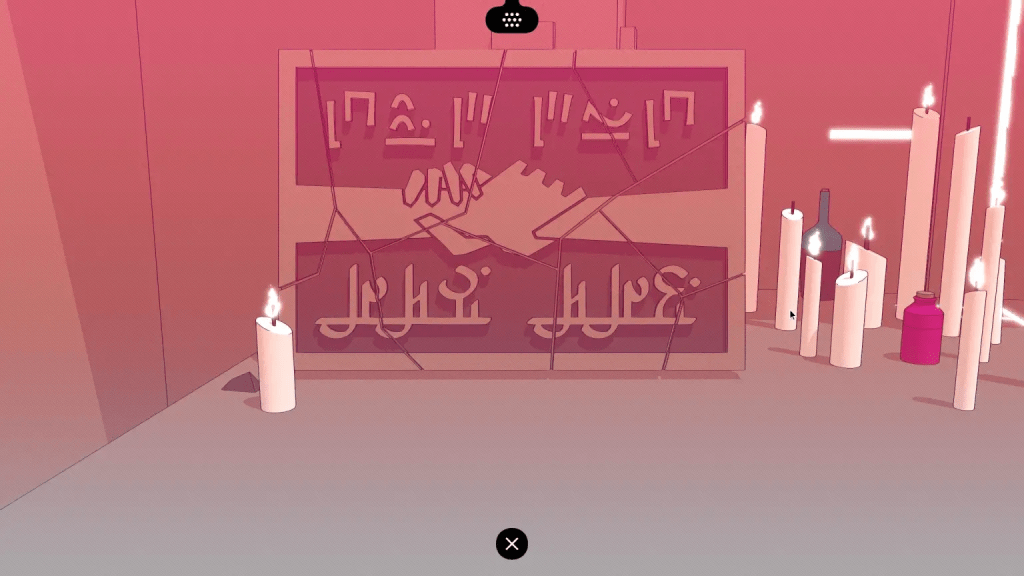
As you progress through the tower, you may also encounter bilingual signs featuring the language of the current floor, and a translation in the language of a preceding floor. Comparing things like these could help understand how the language works, such as word order, negation, and marking of plural nouns. Double-pages may also pop up prompting you to provide the translation of one glyph in a lower floor in the glyph used by the language in the current floor.

You might also encounter terminals that show screens like in the image above. These prompt you to provide the translation from one language used in the floor the terminal is in to a language used in another floor. Completing these correctly results in a rebuilding of a link between floors, contributing to progress in the game.

Having gone over the key features and mechanics of the linguistic side of the game, and having personally fully completed the game, I think it is time to give my thoughts on it.
Amongst the singleplayer puzzler games I have played, the core mechanics of Chants of Sennaar is by far quite unique. It is not every day one would encounter a game based on deciphering writing systems and languages, and presented in such a way it is friendly to players who may not be familiar with topics in linguistics. Perhaps the closest thing I can compare these mechanics to is the International Linguistics Olympiad and its individual and team problems, though Olympiad problems are expectedly substantially more difficult than Chants of Sennaar. It ultimately revolves around understanding patterns, except that these patterns are found in how we speak, read, and write.
The learning curve is pretty gentle, and it encourages players to explore the floor and find out more about the languages. There are also more game mechanics involved together with the language-based one, including interactive puzzles and stealth, providing a neat diversity of things players can do in the game in addition to deciphering writing systems. Sometimes, these might even unlock Steam achievements for you as well.
Another feature that I would like to show some love to is the sound design of this game. In game design, how the background sounds and music are composed are important in setting the scene of a certain floor, and contribute to the ambience and the worldbuilding in the game. Amongst the tracks used, I was quite impressed by one that used polyphonic singing, which sounded quite similar to throat singing you might find in Tuva and Mongolia. While I find it unusual when it comes to complementing the visual design of the floor, which appeared rather Mediterranean, the overarching theme and lore does seem to make the use of such a track appropriate. Lutes, lyres, and other instruments used in antiquity can also be heard in some floors of the game, contributing to the atmosphere of what the music in ancient civilisations like Sumer could have sounded like.
Perhaps one feature I did not like about the game is the control scheme. While one could play the game on a compatible external controller, I did not have that with me when I was playing the game. Instead, moving the character around involved mouse controls, with no alternative like WASD. During my gameplay, I often find myself defaulting to the keyboard movement scheme instead of clicking on the screen to navigate my character, which definitely took a lot of getting used to. Camera angles are a bit rigid, potentially removing some leeway for the developers to add more Easter eggs in the game, or more game secrets that could be found. These downsides are not a deal breaker, Chants of Sennaar is still a great indie title nonetheless.
While players have taken to speedrun Chants of Sennaar, with the current Any% world record being under 45 minutes, there are perhaps other ways we can appreciate this game. One unusual way I could replay this game is by switching the game’s localisation to another support language that I have yet to learn, and play the game in that language. This way, I would be technically learning some basic words and vocabulary in the other supported languages by means of deciphering these fictional languages. And if you are learning languages like Mandarin Chinese and Japanese, there are an extra set of characters to decipher for yourselves, since there are no reading aids to help you with how the Chinese characters and Japanese kanji are pronounced.
I would definitely recommend it to anyone and everyone. You do not need to have to be good at languages to play the game, as this system of deriving meanings of the glyphs through contextual clues and dialogue boxes gradually builds up, making it friendly to the player. Overall, it provides a nice practical look into how writing systems like this may be deciphered, although it is a rather simplified look at it. Nevertheless, I hope that this game inspires players and users to be more interested in languages, and garners interest in how writing systems and languages work.
I don’t think I can put a numerical rating for Chants of Sennaar, but I could provide a summary of what I like and not like as much about the game in the table below:
| What I like | What I do not like as much |
| Unique core mechanics surrounding how languages work and are deciphered. Gentle learning curve so one does not need to be good at languages to play. | Clicking with the mouse to move definitely needed some getting used to. |
| Worldbuilding for each floor is impressive, complemented by the sound designs such as background music and ambient sounds to add to the atmosphere. | Some camera angles might seem a bit awkward, which might make one lose track of their character. |
Verdict: Definitely recommend
 The Language Closet